


It's a question we hear in different forms: I was involved in an incident, but it wasn't in a car, so am I in the clear? While it may seem like a straightforward situation, the answer to how Georgia civil law applies to non-traditional circumstances is often more complicated than most people think.
A misunderstanding of your rights and responsibilities can lead to significant civil liability.
Understanding Civil Liability in Non-Standard Situations
Many folks across North Georgia communities like Roswell and Johns Creek assume that if a motor vehicle isn't involved, certain rules just don't apply. This is a common, and potentially very costly, misunderstanding.
While you might not face the exact same civil claims as someone in a car accident, Georgia law has broad definitions that can create liability in unexpected ways.
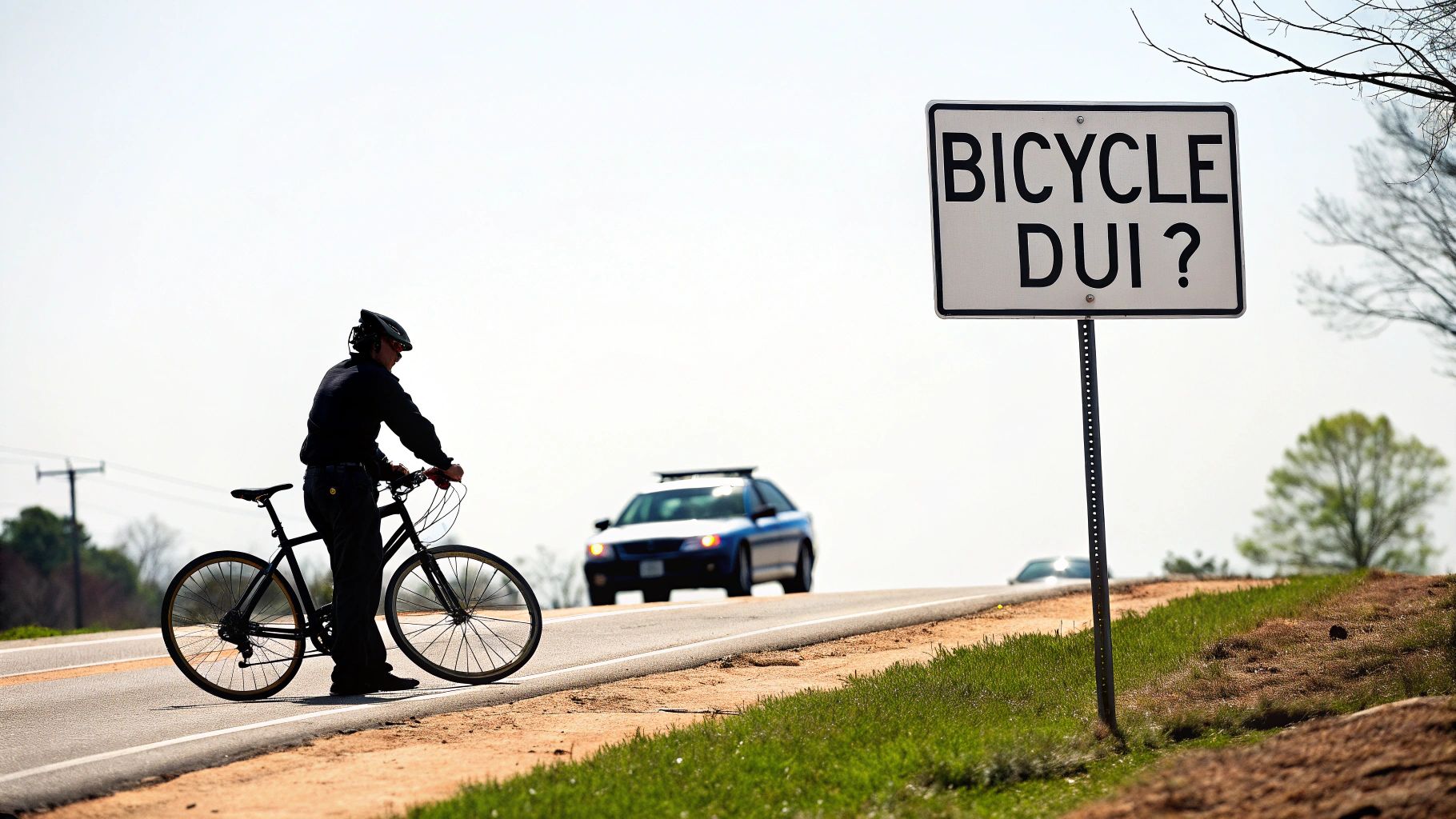
The issue often hinges on how the state defines a "vehicle" in its civil statutes. Georgia's traffic laws, such as O.C.G.A. § 40-6-391, are primarily focused on criminal matters like DUI. However, the legal principles behind these rules can sometimes be applied in civil cases, for instance, to establish negligence. Georgia's courts have, in many traffic related cases, treated bicycles as vehicles. This legal interpretation means that if your actions cause an accident, you could be held financially responsible for damages, a risk highlighted in various studies on the subject.
Potential Civil Claims
Even if a specific traffic statute doesn't perfectly fit, a person in Fulton County or Forsyth County whose negligent actions cause harm can face civil lawsuits. These may include claims for:
- Negligence: If your behavior is erratic and causes an injury or property damage, you could be sued for negligence.
- Reckless Conduct: Swerving into traffic in Marietta or causing a collision in East Cobb could be seen as reckless conduct, forming the basis for a civil claim for damages.
- General Liability: This is a broad area that can apply if your actions are disruptive or cause harm to the public, leading to a personal injury lawsuit.
To make things clearer, let's break down the key legal points from a civil perspective.
Civil Liability Key Legal Points in Georgia
This table summarizes how Georgia civil law might apply to someone whose impaired actions cause harm.
| Legal Factor | How It Applies in a Georgia Civil Case |
|---|---|
| "Vehicle" Definition | Bicycles are often treated as vehicles under traffic laws, which can be used to establish a standard of care in a negligence case. |
| Applicable Claims | A personal injury or property damage lawsuit based on negligence or reckless conduct is a common outcome. |
| Establishing Fault | Evidence of impairment can be used to argue that you breached your duty of care to others, making you liable for damages. |
| Insurance Coverage | A bicycle related accident is unlikely to be covered by auto insurance, potentially exposing your personal assets. |
| Civil Damages | If found liable, you could be ordered to pay for medical bills, lost wages, and property damage. |
At the end of the day, being found liable in a civil lawsuit can mean significant financial consequences.
Remember, the fact that your bike doesn't have a motor doesn't absolve you from a duty of care to others on the road. A judge or jury will focus on whether your actions were a hazard, regardless if that hazard has two wheels or four.
So, while you might sidestep specific motor vehicle statutes, you could still be held financially responsible for any harm you cause.
How Georgia Law Defines a "Vehicle"
The question of civil liability in many non-traditional incidents often involves one simple but powerful word: vehicle. Most people, from Dawsonville to East Cobb, hear "vehicle" and immediately think of something with a motor. But the way Georgia law is written paints a much broader picture, and it's a critical distinction to understand in civil litigation.
Georgia Code O.C.G.A. § 40-1-1(75) defines a vehicle as “every device in, upon, or by which any person or property is or may be transported or drawn upon a highway.” The only things left out are devices that run exclusively on stationary rails or tracks, like a train.
Notice what’s missing from that definition? Any mention of an engine or motor. That broad language isn't an accident, and it has major consequences for anyone involved in a civil dispute on Georgia roads.
The Human-Powered Vehicle
Based on the plain text of the statute, a standard bicycle absolutely fits within the legal definition of a vehicle. It's a device that a person uses to be transported on a highway. This isn’t a new interpretation; Georgia courts have consistently held this view in various traffic related cases, which can influence how fault is determined in a civil lawsuit.
The law gets even more specific. Georgia Code O.C.G.A. § 40-6-291 spells it out, stating that every person riding a bicycle on a roadway has all the rights and is subject to all the duties applicable to the driver of a vehicle.
This is the legal hook. It means a cyclist in Alpharetta or Johns Creek has to follow the same rules of the road as a motorist. It’s also what establishes a "standard of care" in a civil case. If a cyclist fails to follow these rules and causes an accident, they can be found negligent. This legal standard is just as applicable in a courtroom in Fulton County or Forsyth County as any other traffic safety law.
What About E-Bikes and Scooters?
With the explosion in popularity of electric bikes and scooters, the line gets even sharper. These devices are self-propelled, which means they fit even more cleanly under the "vehicle" umbrella. While a traditional bike’s status relies on that broad legal interpretation, the addition of a motor makes it very difficult to argue that an e-bike or scooter isn't a vehicle subject to all traffic laws. As more people use these for transportation, you can expect courts to treat them accordingly when determining fault in civil disputes.
Understanding Potential Civil Lawsuits
Just because a situation does not involve a car accident doesn't mean an injured party is without recourse. If someone in North Georgia is harmed by another's negligence, they can pursue a civil lawsuit to recover damages.
This means that even if you argue that your bike isn't a "vehicle" under a specific statute, you are not necessarily in the clear. An injured party’s attorney will focus on proving you were negligent and caused harm, whether in communities like Roswell or Johns Creek. They have several legal avenues to make that happen.
Common Civil Claims in Georgia
When a specific motor vehicle claim is off the table, an injured party will likely pursue a lawsuit based on general negligence principles. The specific claim often comes down to your behavior and the exact circumstances of the incident.
-
Negligence: This is the most common claim. If you were visibly impaired or simply not paying attention, and that carelessness caused an injury, you can be sued. Stumbling into someone, causing a fall, or being too unsteady to control your bicycle are all behaviors that could easily lead to a negligence lawsuit.
-
Negligence Per Se: This is a legal doctrine where an act is considered negligent because it violates a statute. For a cyclist, this could mean causing an accident while running a stop sign in Canton. The violation of the traffic law itself can be used as evidence of negligence.
-
Reckless Conduct: This is a more serious basis for a civil claim. Georgia law defines reckless conduct as acting in a way that consciously ignores a major, unjustifiable risk and puts another person in danger. A cyclist weaving into traffic on a busy Cumming road or blowing through intersections without looking could certainly find themselves facing a lawsuit based on this standard.
The key takeaway here is simple: not having a motor doesn't grant you immunity from civil liability. A court’s first concern is compensating the injured party, and they will use established legal principles to determine who was at fault.
It’s also critical to remember that these civil lawsuits are not minor. A judgment against you can result in significant financial liability for medical bills, lost wages, and pain and suffering. While the legal arguments are different from a car accident case, understanding factors that may lead to an aggravated DUI can help you see just how seriously the law treats impairment as a factor in determining fault. Each of these civil claims has its own set of legal elements that must be proven, which is why getting guidance from an experienced civil litigation attorney is so essential.
What Happens During a Civil Dispute Investigation
If you are involved in an incident in North Georgia while on a bicycle, the subsequent investigation will feel very different from one for a car crash. Without police reports detailing a traffic violation, the focus shifts to direct, personal observations and witness testimony. Attorneys for the injured party will look closely at physical coordination, statements made at the scene, and whether simple instructions were followed.
An attorney may use depositions to ask you about your actions leading up to the incident. They may question witnesses about your behavior. The goal is to establish a pattern of negligence. But let's be realistic: how reliable is this testimony? Balance is already the name of the game when you're on a bike. Factors like being tired from a long ride, uneven pavement, or even the clip-in shoes you’re wearing can affect your coordination.
The Role of an Impairment Allegation
A big question that always comes up is how an allegation of impairment affects a civil case. This is where things can get murky. While you may not be facing a DUI, evidence of impairment can be powerful in a civil lawsuit.
Since you aren't operating a motor vehicle, any refusal of a law enforcement test at the scene generally won't trigger the automatic license suspension that a driver would face. However, the opposing attorney can still bring up evidence of impairment in court to argue you were negligent. To get a better handle on these situations, it's helpful to learn more about civil litigation processes, which are very different from how to conduct yourself at a DUI stop.
This infographic illustrates how a civil claim can proceed even if criminal charges are dismissed.
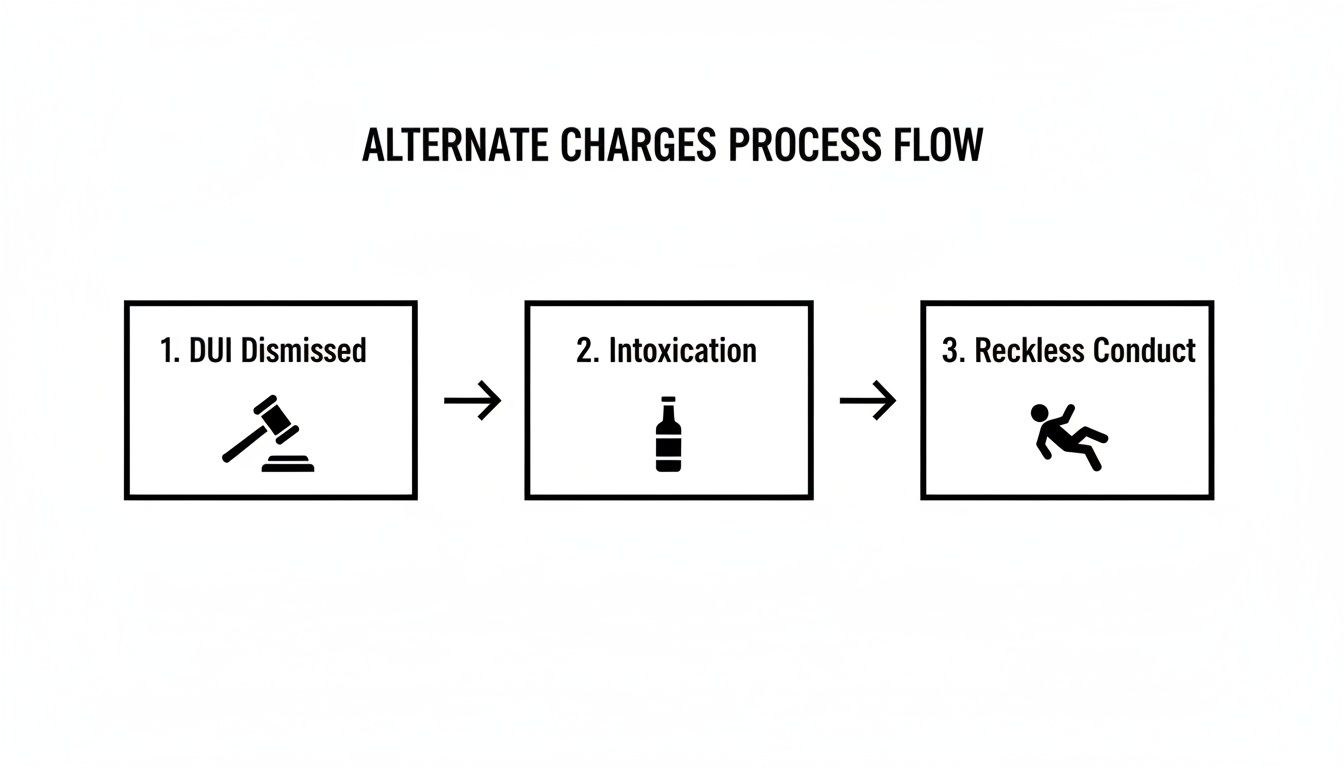
As you can see, a dismissed criminal matter can easily pivot to a civil lawsuit based on negligence, which shows how an injured party can adapt to make sure some kind of claim is pursued.
The core issue during a civil case is the evidence of your negligence. Unlike a car accident with clear police reports, a bicycle case often relies heavily on witness observations and arguments about the "reasonableness" of your actions.
This subjectivity opens up a lot of room for a strong legal defense. A skilled civil litigation attorney can pick apart every detail of the incident, from the initial claims made in Cumming or Alpharetta to how the opposing side is attempting to prove fault. Challenging the evidence at this early stage is absolutely critical to building a defense against a civil liability claim.
Comparing Financial Liability in Civil Cases
The thought of facing a lawsuit is nerve-wracking, whether you were on two wheels or four. But when it comes to the potential financial liability here in Georgia, there's a world of difference between a typical car accident claim and a lawsuit stemming from a bicycle incident.
Getting a handle on this distinction is the first step toward managing your expectations and figuring out what might be coming down the pike.
A judgment in a car accident case often involves insurance companies. We’re talking about required liability coverage, insurance adjusters, and a process designed to handle these specific types of claims. The consequences are built around the immense danger a two-ton vehicle poses to everyone on the road.
How a Bicycle Related Lawsuit Differs
On the other hand, a lawsuit related to a bicycle incident, for example, a claim of reckless conduct or general negligence, is typically a personal liability matter. While you absolutely still need to take it seriously, these claims may not be covered by your auto insurance. This is a crucial difference.
For instance, a judgment against you for reckless conduct could lead to you being personally responsible for paying the damages, which might affect your personal assets. The law recognizes that the source of compensation is different, and the legal process reflects that reality.
This isn't just a Georgia thing, either. Jurisdictions all over are figuring out how to handle civil liability for non-motorized vehicles. Many courts are applying traditional negligence principles to these new scenarios, creating a complex legal landscape. It’s a worldwide trend toward ensuring that injured parties have a path to compensation, regardless of the type of vehicle involved.
A Clear Comparison of Potential Consequences
To really put the potential outcomes into perspective, let's compare the typical process for a car accident claim with what you might face in a bicycle related civil lawsuit here in Georgia.
Liability Comparison Motor Vehicle vs Bicycle Incident
This table contrasts typical liability issues for a standard car accident claim with potential consequences for a bicycle related lawsuit in Georgia.
| Liability Factor | Standard Motor Vehicle Claim | Potential Bicycle-Related Lawsuit (e.g., Reckless Conduct) |
|---|---|---|
| Primary Payer | Auto Insurance Company (up to policy limits) | Your Personal Assets (unless covered by a homeowner's or umbrella policy) |
| Damages | Medical bills, lost wages, property damage, pain and suffering | Medical bills, lost wages, property damage, pain and suffering |
| Insurance Involvement | Mandatory and central to the process | Uncertain; depends on your specific insurance policies |
| Legal Framework | Specific motor vehicle statutes often apply | General negligence and personal injury law |
| Financial Exposure | Often limited by insurance policy coverage | Potentially exposes all of your personal assets to a judgment |
While it’s clear the source of payment is different, the most critical similarity is impossible to ignore: a civil judgment against you can have a devastating financial impact.
That can have long-lasting effects on your financial stability, ability to secure loans, and maintain your reputation in communities like Alpharetta, Cumming, or Johns Creek. Even a seemingly minor incident demands a smart, strategic legal approach to protect your future.
Why You Need Experienced Legal Guidance
Facing any kind of legal trouble is a stressful experience. That stress gets dialed up even higher when you're dealing with confusing laws that carry surprisingly serious and long-lasting financial penalties.
Even though you were just on a bicycle, a civil judgment against you can create a significant financial burden. This isn't a minor issue; it can pop up and impact your personal and professional life in ways you'd never expect for years down the road.
Protecting Your Future and Finding a Path Forward
This is where having an experienced legal guide becomes so critical. A skilled civil litigation attorney does much more than just show up for you in court. They bring the clarity and confidence you need to navigate a difficult time, meticulously picking apart every detail of your situation, from the moment the incident occurred to the evidence being used against you.
In places like Fulton County and Forsyth County, that local legal knowledge is everything. An attorney who knows the local courts and opposing counsel can see challenges coming and build a tough, effective strategy to protect your rights and assets.
The ultimate goal is to find a clear, calm, and effective path forward. The right legal guidance focuses on minimizing the long-term impact and securing the best possible outcome for you and your family.
Whether it’s through smart negotiation, mediation, or a fight in the courtroom, having a steady hand to guide the process makes all the difference. When you’re not sure what happens next, a professional can lay out all your options. For more on this, you can learn about civil court processes, which are entirely different from preparing for court and what to expect when facing a DUI charge in Georgia.
Getting Answers to Your Civil Litigation Questions
When the law gets applied in ways you don't expect, things can get confusing fast. Here are some answers to the questions we hear most often from folks in North Georgia who find themselves dealing with a civil lawsuit.
Can I be sued if I refuse a breathalyzer after a bicycle accident?
Yes, you can still be sued. In Georgia, a breathalyzer refusal is primarily tied to criminal DUI law and the administrative suspension of a driver's license.
A civil lawsuit for negligence is a completely separate matter. The person suing you (the plaintiff) does not need a breathalyzer result to file a claim. They will use other evidence, like witness testimony or your own statements, to argue that you were impaired and therefore negligent. A refusal might even be used by their attorney to suggest you had something to hide.
Can I be sued if an accident happens on private property in Cumming?
Yes, you can be sued for an incident on private property. While Georgia’s traffic laws mainly apply to public roads, the principles of negligence apply almost anywhere.
If you negligently cause injury to someone in a private parking lot, a residential driveway, or other private land, the injured party has the right to file a personal injury lawsuit against you. The location of the incident does not protect you from civil liability if you were at fault.
The legal arguments in these kinds of cases are incredibly specific to the facts. Whether you had a duty of care to the other person is a key detail a good civil litigation attorney would immediately analyze.
Is an E-Bike or Electric Scooter Treated the Same as a Regular Bicycle in a Lawsuit?
This is where the law is still catching up. Because e-bikes and scooters have motors, they blur the line between a bicycle and a "motor vehicle." This can complicate a civil case.
In places like Forsyth or Fulton County, an attorney for the injured party might argue that the motorized nature of the device means a higher standard of care was required. This could make it easier for them to prove negligence. If you were on any kind of electric-powered device, it’s critical to get legal advice to understand how the law applies to your situation.
What Is the Best First Step If I am involved in an accident on a bike in Alpharetta?
The most important thing you can do is seek medical attention if needed and avoid admitting fault. Beyond that, your best move is to document everything you can remember and gather contact information from any witnesses.
As soon as you possibly can, you should get in touch with an experienced civil litigation attorney. A lawyer's job is to protect your rights from the very start, analyze whether you have any liability, and give you clear advice on what to do next to protect your assets.
If you are facing a complex legal situation and need clear guidance, the team at Miles Hansford Law Firm is here to help you understand your options and protect your rights. Contact us to schedule a consultation at https://mileshansford.com.