


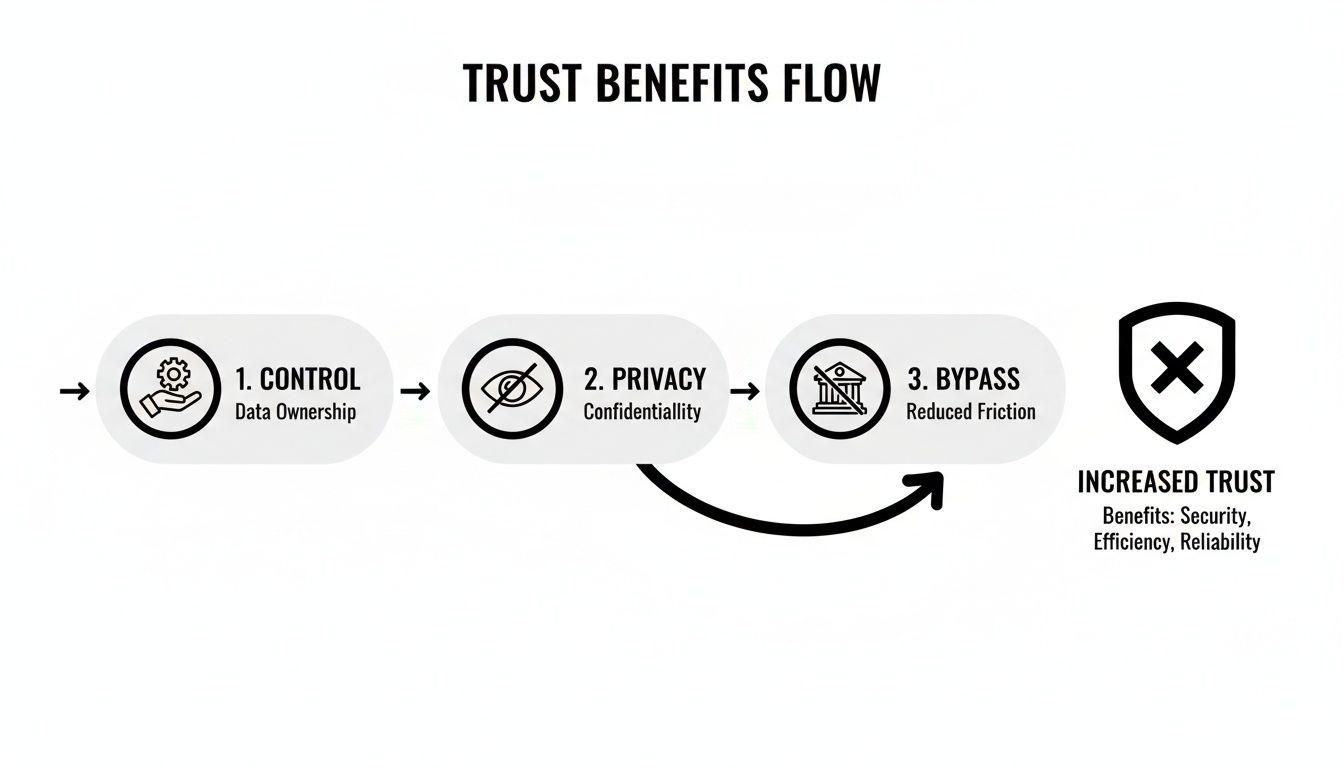
Planning for your family's future can feel overwhelming, especially when you're unsure how to protect the assets you've worked so hard to build. For many families in Alpharetta, a revocable living trust offers a powerful solution that provides control, privacy, and peace of mind. While a will is an important first step, a trust is a strategic tool that allows your estate to bypass the public and often lengthy probate process in Georgia.
When an estate goes through probate in Alpharetta, it becomes a public proceeding in the Fulton County Superior Court. This process can be slow, expensive, and exposes your family's financial details to public view. A revocable living trust is a private legal agreement that ensures your assets—from your home in Milton to your business in Johns Creek—are managed and distributed according to your exact wishes, without court intervention. Protecting your family from this process is our first priority. To understand your options, speak with a family law attorney at Miles Hansford today.
Why a Living Trust Matters for Your Alpharetta Family
The primary benefit of a living trust is its ability to avoid probate. But for families in high-growth areas like Alpharetta, Cumming, and Roswell, the advantages of privacy and control are equally important. A will becomes a public record once it is filed with the court, meaning anyone can see the value of your estate and who inherited your assets. This is often a significant concern for business owners and high-net-worth individuals.
A revocable living trust remains a completely private document. It also provides a clear plan for managing your affairs if you become incapacitated. If an illness or injury leaves you unable to handle your finances, your chosen successor trustee can step in immediately. This avoids a public, costly, and stressful guardianship or conservatorship proceeding in the Fulton County courts, ensuring your assets are protected when you are most vulnerable.
Will vs. Revocable Living Trust in Georgia: A Comparison
Understanding the key differences between a will and a trust is essential. For many families in Alpharetta, this comparison clarifies which path offers the best protection for their unique situation.
| Feature | Will | Revocable Living Trust |
|---|---|---|
| Probate Required | Yes. All assets must pass through the public probate court process in Fulton or Forsyth County. | No. Assets properly funded into the trust bypass probate entirely. |
| Privacy | Becomes a public record once filed with the court. | Remains a completely private document, protecting your family's financial affairs. |
| Asset Management on Incapacity | Requires a separate power of attorney. Otherwise, a court-appointed conservator may be needed. | Your named successor trustee can manage assets immediately if you become unable. |
| Effective Date | Only takes effect upon your death. | Becomes effective as soon as it is signed and funded. |
| Asset Transfer Time | Can take months or even years due to court backlogs. | Assets can often be distributed to beneficiaries in a matter of weeks. |
While a will is a foundational part of any estate plan, a revocable living trust provides a superior framework for efficiency, privacy, and control. Learn more about why living trusts could benefit your estate and how this tool can protect your family’s legacy.
The Legal Process of Creating a Revocable Living Trust in Alpharetta
Establishing a revocable living trust is a strategic process designed to safeguard your legacy according to Georgia law. It is more than filling out a form; it's a personalized plan crafted to meet the specific needs of your family in Alpharetta, Cumming, or surrounding North Georgia communities. A well-constructed trust allows you to maintain control, protect your privacy, and, most importantly, avoid the public probate process.
The trust agreement serves as the rulebook for your estate. Using a generic online template is a significant risk, as it cannot account for the nuances of Georgia law or the specific circumstances of your family and assets. Your trust must be drafted with precision to be effective.
Key Roles in Your Alpharetta Living Trust
Every trust involves three essential roles. Understanding these roles is the first step toward building a plan that works for you and your loved ones.
- Grantor: This is you. As the creator of the trust, you set the rules and decide which assets to include. Because the trust is revocable, you retain the power to change or cancel it at any time while you are competent.
- Trustee: This person manages the trust's assets. Initially, you will be your own trustee, maintaining full control over your property just as you do now. You will also name a Successor Trustee to take over if you become incapacitated or pass away.
- Beneficiary: These are the individuals or charities you designate to inherit from the trust. You can name primary beneficiaries and also contingent (backup) beneficiaries.
Drafting a Trust That Complies with Georgia Law
To be legally sound and effective in Georgia, your trust document must include several critical provisions.
- Clear Successor Trustee Designations: Name who will take over as trustee and in what order. Clarity here is vital to prevent confusion or the need for court intervention.
- Specific Distribution Instructions: Detail how and when your beneficiaries will receive their inheritance. A common strategy for parents in North Georgia is to stagger distributions at certain ages or life milestones.
- Incapacity Clause: This section defines what "incapacitated" means and who makes that determination (usually one or two physicians). This empowers your successor trustee to step in without a court order.
- Spendthrift Provisions: This crucial legal language helps protect a beneficiary's inheritance from their future creditors or a divorce, a protection many families find invaluable.
Once the trust document is drafted, it must be executed correctly to be valid in Georgia. In our practice serving Alpharetta, Cumming, and nearby cities like Suwanee and Sandy Springs, we adhere to a strict signing protocol to ensure your trust is legally binding and secure.
The Strategy for Funding Your Trust in Alpharetta
Creating the trust document is only the first step. To make it work, you must fund the trust by formally transferring ownership of your assets into it. An unfunded trust is like an empty vault—it exists, but it protects nothing. It will not help your family avoid probate in Fulton County or Forsyth County courts.
This retitling process is detailed and varies for each asset. It’s a critical step where DIY solutions often fail. Our attorneys provide hands-on guidance to ensure your home, bank accounts, and other assets are correctly titled in the name of your trust.

Transferring Real Estate in Fulton and Forsyth County
For most families in North Georgia, their home is their most significant asset. To move your primary residence in Alpharetta or a rental property in Dawsonville into your trust, you must execute and record a new deed.
This involves preparing a deed that transfers the property from your individual name to the name of your trust (e.g., from "John Doe" to "John Doe, Trustee of the John Doe Revocable Living Trust"). This new deed must be signed, witnessed, notarized, and filed with the Clerk of Superior Court in the county where the property is located—the Fulton County Superior Court for a home in Alpharetta or the Forsyth County Superior Court for a home in Cumming.
Moving Financial Accounts into Your Alpharetta Trust
Your bank and investment accounts must also be retitled. The process depends on the financial institution.
- Bank Accounts: You will work with your bank to change the legal owner of your checking and savings accounts to the trust. This typically involves providing a copy of your trust document or a Certificate of Trust.
- Investment Accounts: Your financial advisor or brokerage firm will have a specific process for retitling brokerage accounts into the name of your trust.
- Business Interests: If you own an LLC or partnership in Alpharetta, your ownership interest must be formally assigned to the trust. This requires reviewing your company’s operating agreement and preparing the necessary legal documents to ensure a seamless transition of management if needed.
Properly funding your trust is the only way to ensure it functions as intended. To protect your assets and your family, contact Miles Hansford today to schedule a consultation and discuss your estate plan.
What to Expect in Forsyth and Fulton County Courts
If you pass away without a funded trust, your estate will enter the probate system. In our area, this means your will is filed with either the Forsyth County Superior Court or the Fulton County Superior Court. This process makes your private family matters public and can take months, or even years, to resolve. Court costs, executor fees, and attorney fees can diminish the inheritance you planned to leave your loved ones.
Similarly, if you become incapacitated without a trust, your family may have to petition the court to have a conservator appointed to manage your finances. This is a public, costly, and emotionally draining process that can be completely avoided with a properly structured revocable living trust. Our goal is to keep your family out of the courtroom and protect your legacy.

A Note on Trustee Selection
Choosing your successor trustee is one of the most important decisions you will make. This individual or institution will be responsible for managing your assets and carrying out your wishes. They are bound by a fiduciary duty under Georgia law to act in the best interests of your beneficiaries.
You can appoint a family member, such as a spouse or adult child, or a corporate trustee, like a bank's trust department. The right choice depends on your family dynamics, the complexity of your estate, and your long-term goals. We can help you weigh the pros and cons to select a trustee who is organized, impartial, and trustworthy. For more information, you can read more about what a successor trustee does for an estate. We also recommend understanding trustee responsibilities after death to grasp the full scope of this role.
Why Choose Miles Hansford for Your Cumming & Alpharetta Trust
When you need to protect your family's future, the attorney you choose matters. You need a legal partner who understands not only Georgia estate planning laws but also the local dynamics of the Cumming and Alpharetta communities. At Miles Hansford, our attorneys live and work in North Georgia. We are in the Forsyth County and Fulton County courts daily, giving us practical insight into the procedures that will affect your family.
Our firm's deep experience in family law, divorce, and business litigation provides a unique advantage. We understand how life events like a high-asset divorce, a new business venture in Canton, or the complexities of a blended family can impact your estate plan. We build comprehensive strategies that anticipate these challenges, ensuring your trust is a resilient shield for your assets. This is a core part of effective estate management.
We help professionals, parents, and business owners across Cumming, Alpharetta, Milton, and Johns Creek create plans that provide true peace of mind. Our approach is calm, strategic, and protective, focused on securing everything you have worked to build. Take the first step toward protecting your legacy.
Speak with a family law attorney at Miles Hansford to schedule a confidential consultation.
Frequently Asked Questions About Revocable Living Trusts in Cumming, GA
Our clients in Cumming and Alpharetta often have questions about how a revocable living trust works in Georgia. Here are direct answers to some of the most common inquiries we receive.
Q: Does a living trust let me avoid probate in Forsyth County, GA?
A: Yes. This is a primary benefit. Any asset properly titled in the name of your trust will not go through the public probate process in the Forsyth County Superior Court. This allows your successor trustee to manage and distribute your assets privately and efficiently, saving your family significant time, stress, and expense.
Q: Can I still control my assets after creating a trust in Alpharetta, GA?
A: Absolutely. As the grantor and initial trustee of your revocable living trust, you retain complete control. You can buy, sell, refinance, or manage your property exactly as you did before. The trust is simply a legal container for your assets that you continue to control throughout your lifetime.
Q: What happens if I become incapacitated in Cumming, GA?
A: A living trust provides seamless protection. Your designated successor trustee can immediately step in to manage your financial affairs without needing to go to court. This avoids a public and costly guardianship or conservatorship proceeding in the Forsyth County courts, ensuring your bills are paid and your assets are managed by someone you chose.
Q: How much does it cost to set up a living trust in the Cumming area?
A: While a revocable living trust has a higher upfront cost than a simple will, it often saves your estate a substantial amount of money by avoiding probate. The legal fees for probate in Forsyth or Fulton County can be significant. A trust is an investment in protecting your assets and simplifying the process for your loved ones.
Q: Is a revocable trust the same as an irrevocable trust?
A: No, they serve different purposes. A revocable trust is flexible—you can change or cancel it. Its main goals are probate avoidance and incapacity planning. An irrevocable trust is permanent and used for more advanced goals like asset protection from creditors or estate tax mitigation. To learn more, learn more by comparing revocable vs. irrevocable trusts.
Q: Do I still need a will if I have a trust in Alpharetta, GA?
A: Yes. You will have a "pour-over will" that works with your trust. This will acts as a safety net, directing any assets not already in your trust at the time of your death into the trust. For example, if you bought a car in Roswell and forgot to title it in the trust's name, the pour-over will ensures it is distributed according to your trust's instructions.
Planning for your future provides security for those you love most. The attorneys at Miles Hansford Law Firm offer calm, strategic, and protective guidance to families across Cumming, Alpharetta, and North Georgia. We are here to help you build a revocable living trust that secures your assets and your peace of mind. To begin the process, schedule a confidential consultation with our team.