


The first rule of mediation? You do not just show up. Real preparation—gathering your documents, understanding your finances, and clarifying your goals—is what happens before you ever sit down at the table. This is the groundwork that allows you to negotiate from a position of strength and clarity, not desperation.
Building Your Foundation for a Successful Mediation
Whether you are dealing with a complex family law matter in Fulton County or a business disagreement in Forsyth County, mediation hands you a rare opportunity to control the outcome. But that control does not just happen. Success almost always comes down to the quality of your preparation, which starts long before the mediation session itself.
Think of this early phase as building the framework for your entire case. It is more than just a paper-shuffling exercise; it is about weaving facts, finances, and correspondence into a clear story that backs up your position. A well-organized case file gives you and your attorney the confidence to present your arguments effectively.
Gather Your Essential Documents
The first real step is a thorough collection of every relevant document. This is the evidence that tells your story. The specific documents depend on your case, but some items are almost always on the list.
To help you get started, here is a look at the core documents you will likely need for common mediation cases in North Georgia.
Core Documents for Georgia Mediation
| Case Type | Key Documents and Information Needed |
|---|---|
| Divorce/Family Law | Tax returns (last 3-5 years), bank and investment statements, pay stubs, retirement account details (401k, IRA), property deeds, vehicle titles, mortgage statements, credit card bills, and documents related to children (school records, medical bills, childcare costs). |
| Business/Civil Dispute | The original contract in dispute, all relevant emails, letters, and text messages that document the disagreement, invoices, proof of payment, and any records demonstrating financial losses or damages. |
This list is not exhaustive, but it is the foundation. Having these documents organized and ready will make the entire process smoother.
When you are pulling these files together, be mindful that many contain sensitive personal information. If you need to share them with the other side, using secure redaction tools is a smart move to protect your privacy.
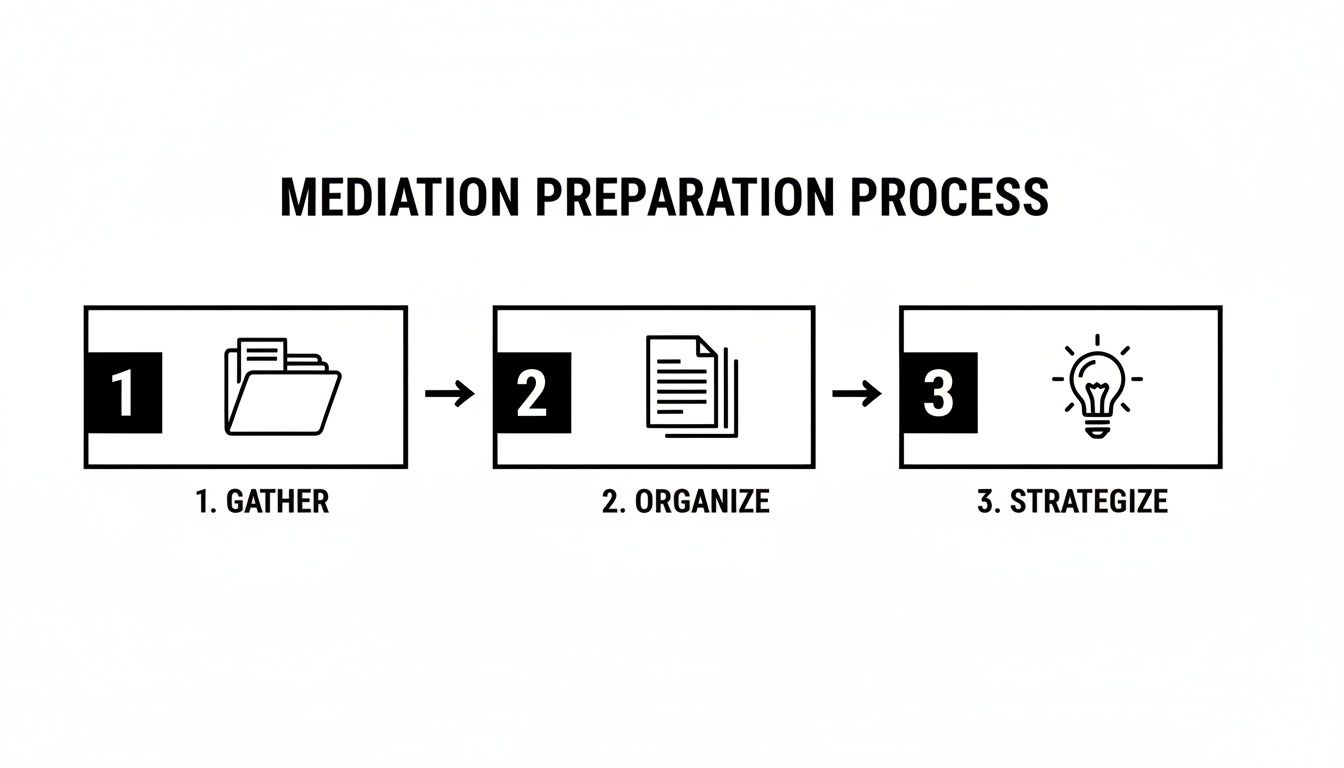
This simple workflow—Gather, Organize, Strategize—is incredibly effective. As you can see, gathering documents is just the beginning. It is the organizing and strategizing that transforms that raw information into a persuasive case. This structured approach is a big reason why thorough preparation has such a powerful impact on the final outcome. For those still weighing their options, it is worth exploring the alternatives you have to litigation.
Did you know that preparing thoroughly for mediation can dramatically boost your chances of success? According to industry statistics, when parties come to the table prepared, they are far more likely to find common ground and avoid a lengthy court battle. Many well-prepared mediations achieve settlement rates well over 80%, demonstrating that preparation directly correlates with successful resolutions.
Crafting Your Negotiation Strategy and Goals
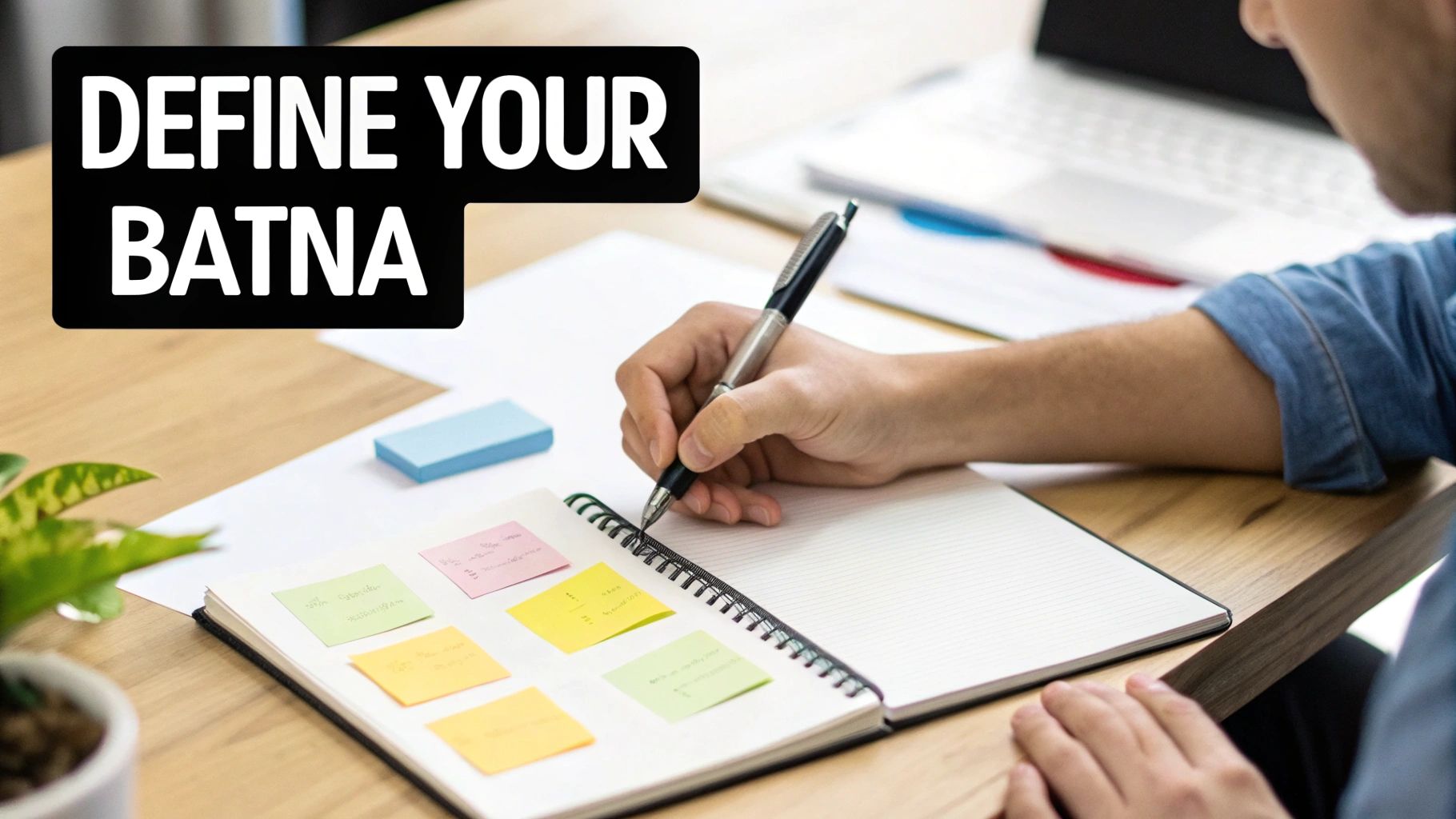
Walking into mediation without a clear strategy is like setting sail without a map or a destination. This is where you move past simply gathering facts and start to define what a good resolution actually looks like for you. It requires honest reflection, a realistic look at the situation, and strategic planning with your attorney.
This whole process is designed to make sure you are negotiating with a clear purpose, not just reacting to whatever the other side presents. The idea is to get beyond the raw emotion of the dispute and zero in on achievable outcomes that truly protect your interests.
Define Your Best and Worst Case Scenarios
First, you need to map out the entire spectrum of possible outcomes. What does an ideal result look like? Get specific here. For a business dispute in Alpharetta, that might mean recovering a debt in full, plus your legal fees. In a Roswell divorce, it could be securing a specific parenting plan while keeping the family home.
Just as important is defining your absolute worst-case scenario if the case goes to trial. What might a judge decide on a bad day? This is not about being negative; it is about setting a realistic floor for your negotiations. Knowing this boundary helps you identify a bad deal when it is on the table.
These two extremes—the best and the worst—create the playing field for your negotiation. Everything that happens in the mediation room will land somewhere between those two points, giving you a solid framework for every decision you have to make.
Identify Your BATNA—The Source of Your Power
Your most powerful tool in any negotiation is your BATNA, which stands for Best Alternative to a Negotiated Agreement. This is not just your worst-case trial scenario; it is what you can most likely expect if mediation fails and you have to see the case through in court.
Your BATNA is your walk-away point. It is the benchmark you will use to measure every single offer that comes your way during mediation. If an offer is better than your BATNA, it is worth serious consideration. If it is worse, you can confidently decline and continue down the path to trial.
Working closely with your attorney is absolutely critical here. They can provide an objective, experience-based take on what a judge in Fulton or Forsyth County is likely to award. That calculation must include the potential legal fees, the time you will lose, and the emotional toll of a trial. It gives you the full, unvarnished picture of your alternative.
Separate Positions from Interests
One of the biggest traps people fall into during negotiations is getting stuck on fixed positions. A position is what you say you want (“I want $100,000”). An interest is the underlying reason you want it (“I need that money to cover the specific damages your breach of contract caused my Cumming-based business”).
When you focus on the underlying interests, you open the door to creative solutions. The other party might never agree to your stated position, but they might be willing to find another way to satisfy your actual interest.
Consider these common situations:
- Family Law: A parent's position could be, "I demand to have the kids every single weekend." Their real interest is likely, "I want to maintain a strong and active role in my children's lives." That interest could be met with a different schedule that actually works better for everyone.
- Business Dispute: A partner's position might be, "I am buying you out for this rock-bottom price." Their interest could be, "I have to keep the business from going under and cannot afford a large cash payout right now." A creative solution might involve a structured payment plan or an equity arrangement.
By taking time to brainstorm the other side’s potential interests, you can anticipate what they need and come up with proposals that solve both of your problems. This simple shift can transform the negotiation from a head-to-head battle into a more collaborative problem-solving session.
Understanding the Process and Key Players
Mediation is driven by people, not just documents. Knowing who is in the room and what to expect from the process can dramatically reduce your anxiety and help you navigate the day more effectively. This part of your preparation is all about understanding the human element of dispute resolution.
Whether you are choosing the right mediator for a sensitive child custody issue in Cumming or preparing a powerful opening for a business dispute in Alpharetta, every detail matters. When you know the typical flow of a mediation session, you can walk in feeling prepared and confident, not intimidated.
The Role of the Mediator
First, it is crucial to understand what a mediator does and, just as importantly, what they do not do. A mediator is a neutral third party whose only job is to help both sides reach a voluntary agreement.
They do not:
- Take sides or act as a judge. They will not declare a winner or a loser.
- Give legal advice. Many mediators are experienced attorneys, but their role here is not to be your lawyer.
- Force you to accept a settlement. They guide the negotiation, but the final decision to settle is always yours.
The mediator's true value is in their neutrality. They are trained to listen, identify the core issues driving the conflict, and find creative ways to bridge the gap. They can also "reality-test" your arguments in private, helping you see your case through a more objective lens.
Choosing the Right Mediator in North Georgia
The mediator you select can have a massive impact on the outcome. Not all mediators are the same; some have deep experience in complex financial matters common in Johns Creek business disputes, while others are skilled at navigating the emotional dynamics of family law cases in Forsyth County.
When selecting a mediator with your attorney, you should consider their:
- Subject Matter Expertise: Do they have a background in family law, business litigation, or your specific area of dispute?
- Style and Approach: Some mediators are more direct, offering opinions on case weaknesses. Others are more facilitative, focusing on helping the parties communicate and find their own solutions.
- Reputation: What is their track record for settling cases like yours in the local legal community? Your attorney’s insight here is priceless.
A good mediator creates an environment where productive conversations can happen. Making the right choice sets the stage for success before you even walk in the door.
The Typical Flow of a Mediation Session
While every mediation is unique, they usually follow a predictable structure. Knowing these steps helps you stay centered and focused. The process often starts with a joint session, where everyone gathers in the same room. The mediator will explain the ground rules, and each side will have a chance to make an opening statement.
Your opening statement is your first and best chance to frame the dispute from your perspective. Keep it concise, calm, and constructive. This is not the time for accusations or emotional attacks; it is an opportunity to state the key facts and signal your willingness to negotiate in good faith.
After opening statements, the parties usually break out into separate rooms for private caucuses. From here, the mediator will shuttle back and forth, relaying offers, exploring settlement options, and confidentially discussing the strengths and weaknesses of each side's case. This is where the real negotiation happens. You can learn more about the specifics by reading our overview of a look at the mediation process.
These private conversations are where you and your attorney will analyze offers and make strategic decisions. The process continues—moving between private caucuses and occasional joint sessions—until an agreement is reached or the parties decide they have reached an impasse.
Adapting to Virtual and In-Person Mediation Settings
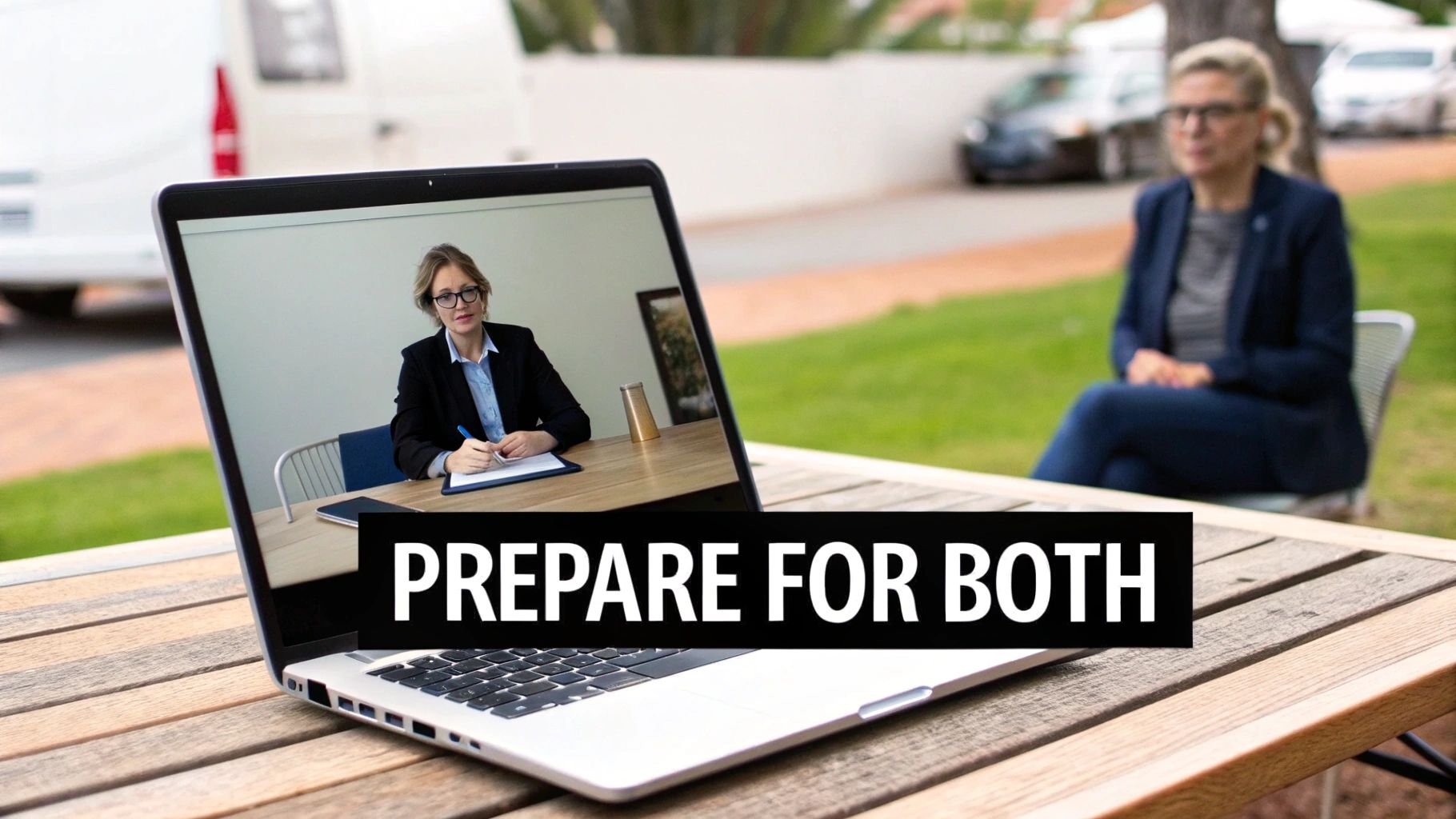
Whether your mediation happens online or across a conference table in Cumming, the setting shapes the negotiation's dynamic. Both formats demand a specific kind of prep work. Knowing the nuances is the key to presenting your case effectively.
The shift to virtual platforms has been one of the biggest changes in how we resolve disputes. It has made the process more accessible for many North Georgia families and businesses. In fact, a significant percentage of civil and family law cases are now conducted virtually or in a hybrid format. This trend has stuck around because of its convenience, which means modern mediation prep now includes mastering digital etiquette. You can learn more in resources like the CEDR 2023 Mediation Audit.
Best Practices for Virtual Mediation
Online mediation is convenient, but it brings its own challenges. A smooth technical experience is non-negotiable. Glitches and bad connections can disrupt the flow and undermine your credibility.
Before you log in, make sure you:
- Test Your Tech: A day or two before the session, do a trial run with your attorney. Test your camera, microphone, and the platform you will be using. Make sure your internet is stable.
- Set Up a Professional Space: Find a quiet, private room where you will not be interrupted. Your background should be neutral and uncluttered. A simple wall is always better than a messy room.
- Eliminate Distractions: Close other tabs on your computer, silence your phone, and make sure childcare is handled. Mediation requires your full attention.
- Dress Professionally: Treat this just as you would an in-person meeting. Business casual shows you are taking the process seriously.
It is harder to read body language on a screen, so you must be more intentional. Look directly at the camera when you speak, maintain good posture, and listen actively to show you are engaged.
Navigating an In-Person Mediation Session
While virtual meetings are common, many complex negotiations in Fulton and Forsyth County still benefit from face-to-face interaction. There is a different energy in the room, and your physical presence plays a big part.
For in-person meetings, your focus should be on:
- Professional Etiquette: Be on time. Be courteous to everyone in the room. Maintain a calm demeanor, even when things get heated. Your composure speaks volumes.
- Non-Verbal Cues: Your body language matters a great deal. Sit upright, make appropriate eye contact, and avoid defensive postures like crossing your arms. Projecting confidence and openness can influence the negotiation.
- What to Bring: Your attorney will have the main case file, but you should bring a notebook, a pen, and a copy of any key documents you want handy. Mediations can be long, so bringing a water bottle and a quiet snack is also a smart move.
No matter the format, your demeanor is a strategic tool. A calm, respectful, and prepared attitude builds credibility with the mediator and signals to the other party that you are there to find a reasonable solution. This approach fosters a more productive environment for negotiation.
Ultimately, the goal is to adapt so your message is heard loud and clear. By preparing for the specific environment, you eliminate potential distractions and can focus entirely on the substance of your case. That gives you the best possible shot at a favorable outcome.
What Comes After Mediation? Planning Your Next Steps
Once the mediation session wraps up, many people think the hard part is over. But what happens next is just as critical as the negotiation itself, whether you managed to strike a deal, settled just a few issues, or are still at an impasse. This is where you lock in your progress and figure out where to go from here.
This is the phase where a handshake deal turns into a solid, legally binding agreement. And if you could not find common ground in Cumming or Alpharetta, the focus shifts to what is next in the legal process, which usually means getting ready for court. Knowing what to expect either way keeps you in the driver's seat.
From Handshake to Enforceable Agreement
If you successfully resolved your dispute, the very first thing that happens is putting those terms down on paper. This is usually done with a Memorandum of Understanding (MOU) or a term sheet, which the mediator often types up right there in the room. This document highlights the main points of your agreement, and both parties sign it before leaving.
But the MOU is not the final word. The next job falls to the attorneys, who will draft a formal Settlement Agreement. This document is much more thorough, filled with the specific legal language needed to make sure every part of your deal is clear, complete, and can be enforced by a Georgia court.
It is absolutely crucial that you and your attorney go over this final document with a fine-tooth comb before you sign. Make sure it perfectly matches every single detail you agreed to during mediation. Once it is signed, that agreement becomes a binding contract, and your dispute is officially resolved.
Reaching a verbal agreement is a major milestone, but the work is not finished until a formal, written settlement agreement is signed by all parties. This document is what transforms your negotiated resolution into a final, enforceable outcome.
What Happens When There Is a Partial Agreement
Sometimes, you can agree on some issues but not all of them. This happens frequently. For instance, in a Forsyth County divorce mediation, you might agree on how to divide assets but still be miles apart on the parenting plan. Do not see this as a failure—it is still a win.
A partial agreement shrinks the scope of your dispute. The issues you did resolve are written into a settlement agreement, taking them off the table for any future court battle. This saves you a significant amount of time and money, since your focus in court will be aimed only at the few remaining sticking points. Your attorney will then help you pivot to address those specific issues as your case moves forward.
Navigating an Impasse
If you cannot find common ground on the core issues, the mediation ends in an impasse. It is natural to feel disappointed, but all that preparation was not for nothing. The process almost always gives you an incredible look into the other side’s arguments and what they truly care about, which is invaluable information for trial.
When mediation does not result in a settlement, your case simply gets back on the litigation track. The next steps depend on where you are in the legal timeline, but they could include:
- Further Discovery: Your team might need to gather more evidence through depositions or formal requests for documents.
- Filing Motions: This involves asking the court to rule on specific legal issues before you get to trial.
- Preparing for Trial: Your attorney will start putting together the case to present to a judge or jury in the appropriate Fulton or Forsyth County court.
An impasse is not a failure; it is a strategic shift. It clarifies that a negotiated deal is not available right now, so your focus has to turn to advocating for your position in court. All that detailed work you did for mediation now becomes the strong foundation for your litigation strategy.
Working with Your Attorney for the Best Outcome
Your attorney is your strategic partner in this process. They are your advocate, your guide, and the most valuable player on your team. To get the most out of this relationship, you need a foundation of open communication and shared goals, set long before you ever step into the mediation room.
A successful partnership means you walk in prepared, confident, and perfectly aligned on every point. It all starts with having candid conversations. You and your attorney need to be crystal clear on your budget, your absolute bottom line, and what a "win" actually looks like for you. That clarity is what allows them to build the strongest possible case on your behalf.
Maximizing Your Pre-Mediation Strategy Sessions
Those meetings you have with your lawyer before the big day are essential. This is where you move from just talking about the case to hammering out a concrete, actionable strategy.
These sessions are your chance to:
- Practice your responses: Run through potential offers and counteroffers. Role-play how you will respond to tough questions or arguments from the other side. This builds confidence for the real negotiation.
- Get a reality check: Make sure you understand the strengths and, just as importantly, the weaknesses of your case from a legal standpoint. You do not want any sugarcoating here.
- Define your roles: Decide who will take the lead on what. Your attorney will handle the legal arguments, but you are the one who needs to speak to the real-world impact of the dispute.
Your lawyer’s job is not just to recite the law. It is to frame your story in a way that connects with the mediator and the other side of the table. Giving them all the facts, good and bad, lets them anticipate challenges and address them effectively.
Honesty Is the Only Policy
Holding back information from your attorney is one of the biggest mistakes you can make. They need to know everything, even the parts that you think make you look bad. A surprise in the middle of mediation can completely derail negotiations and weaken your position.
A good lawyer knows how to frame difficult facts or minimize their impact, but they can only do that if they know about them ahead of time. Understanding how a retainer works with a lawyer is a key first step in building that critical trust. When you and your legal counsel operate as a truly united team, you present a confident, persuasive front that is built to get you the best possible resolution.
Common Questions About Georgia Mediation Preparation
Even with the best game plan, questions are going to pop up. Here are some straightforward answers to the things clients across North Georgia ask most often as they get ready for mediation.
How Long Does a Typical Mediation Session Take?
The time required depends entirely on the complexity of your case. A straightforward contract dispute in Alpharetta might be resolved in a half-day session, which is typically four hours. For more involved situations, like a high-asset divorce or a business dispute in Forsyth County, you should plan for a full eight-hour day. Sometimes, the mediator may suggest breaking complex cases into multiple sessions.
What Should I Wear to Mediation?
You should dress in business-casual attire. While mediation is less formal than a courtroom, professional dress shows respect for the process, the mediator, and the other parties involved. It also helps you project confidence and signals that you are taking the matter seriously and are prepared to negotiate in good faith.
Many people assume mediation is just an informal chat. While it is less rigid than court, it is still a formal legal proceeding where perception matters. Your punctuality, demeanor, and attire all contribute to a productive atmosphere.
Will I Have to Speak Directly to the Other Party?
Your attorney will handle most of the legal arguments, but you are an active participant. In the initial joint session, the mediator may invite you to make a brief opening statement. However, most of your communication will take place in private meetings, called caucuses, with just you, your lawyer, and the mediator. Your main role is to listen to offers, provide your attorney with necessary information, and make the final decisions. You will not be cross-examined or forced into a direct confrontation. The structured setting is one of the key benefits of what divorce mediation can do for you.
What Happens If We Do Not Reach an Agreement?
If you cannot agree on all issues, the mediation ends in an impasse. This is not a failure; it simply means a negotiated settlement was not possible on that day. Your case then proceeds to the next stage of the legal process. For most civil or family law disputes in Georgia, this means preparing for a trial where a judge in Fulton or Forsyth County will make the final decisions. The preparation you did for mediation provides a strong foundation for your litigation strategy.
At Miles Hansford, our experienced attorneys guide clients through every step of the mediation process, from initial preparation to final resolution. We provide the steady, strategic counsel you need to negotiate from a position of confidence and clarity. If you are facing a dispute in North Georgia, contact us to discuss how we can help you prepare for a successful outcome. Learn more by visiting us at https://mileshansford.com.