


Receiving a notice for a deposition can be unsettling. A deposition is a formal, out-of-court interview where a witness provides testimony under oath. It is a critical part of the “discovery” phase of a lawsuit, which is the period where both sides gather facts before a trial begins.
Understanding Your Role in a Deposition

Facing a deposition can feel intimidating, but understanding its purpose can help build confidence. This is not a courtroom drama. It is a professional proceeding where attorneys gather facts to build their cases.
In civil lawsuits across North Georgia, from business disputes in Fulton County to divorce proceedings in Forsyth County, depositions are a standard tool. For our clients in communities like Alpharetta, Cumming, or Johns Creek, this process often clarifies the legal road ahead. It is an opportunity to share your side of the story in a controlled setting, with your attorney present to guide you.
What Is the Core Function of a Deposition?
At its heart, a deposition is a formal question and answer session. You will be sworn in under oath, just as you would be in a courtroom, and your answers become a permanent part of the official case record.
The primary goals are straightforward:
- To gather information from witnesses and the opposing parties.
- To preserve testimony while events are still fresh in a witness's mind.
- To see how a witness will perform if the case goes to trial.
- To lock in a witness's story so it cannot be changed later.
This discovery tool helps uncover facts, assess witness credibility, and often leads to settlements without needing to step foot in court. Since the Federal Rules of Civil Procedure were adopted in 1938, depositions have become a fundamental part of the American legal system, shaping how states handle cases.
A deposition allows attorneys from both sides to ask questions and create a sworn record that can significantly influence a case's outcome. Here is a quick breakdown of its key components.
Key Elements of a Deposition at a Glance
This table breaks down the fundamental components of a deposition to give you a clear overview of what to expect.
| Component | Purpose and Description |
|---|---|
| Notice of Deposition | A formal legal document requiring a person to appear at a specific time and place to give testimony. |
| The Deponent | This is the individual being questioned under oath. The deponent can be a plaintiff, defendant, or a third-party witness with relevant information. |
| Attorneys | Lawyers for all parties in the lawsuit are present. They ask questions, make objections, and advise their clients. |
| Court Reporter | A certified professional who records every word spoken during the deposition, creating an official transcript. |
| The Oath | The court reporter administers an oath at the beginning, making the deponent’s testimony legally binding and subject to penalties for perjury. |
| Questioning | Attorneys take turns asking the deponent questions. The scope is broad, covering any information that could lead to admissible evidence. |
| The Transcript | The final, written record of the deposition. It can be used in court to question a witness, support motions, or as evidence if a witness is unavailable for trial. |
Understanding these pieces can help demystify the process and prepare you for what is ahead.
Why Depositions Are a Critical Turning Point
A deposition is more than a simple question and answer session. It is a strategic tool that often becomes a major turning point in a civil lawsuit, one that can shape the entire outcome of your case.
For our clients in Alpharetta or Cumming dealing with sensitive family law matters or high stakes business disputes, understanding a deposition's true purpose is key.
The main goal is to gather crucial information. While your attorney already has documents and records, a deposition adds the human element. It is the first real chance to hear the other party’s side of the story, in their own words, while they are under oath.
Uncovering the Truth and Assessing Credibility
A deposition is where your attorney can lock in testimony. Once someone states a fact under oath, it becomes an official part of the record. If they try to change their story later in court, your lawyer can use the deposition transcript to challenge their credibility.
This process is invaluable for determining the strengths and weaknesses of both sides of the case.
A deposition provides a unique window into how a witness will perform under pressure. Their demeanor, consistency, and ability to communicate clearly can significantly influence settlement negotiations or trial strategy.
This is especially critical in Forsyth and Fulton County civil cases, where disputes often come down to one person's word against another's.
Setting the Stage for Resolution
A strong performance in a deposition can pave the way for a favorable settlement. When the other side sees that you are a credible, confident, and consistent witness, they may be more willing to negotiate.
A well handled deposition shows you are prepared to present your case effectively at trial. That realization often encourages a resolution that saves everyone the time, expense, and stress of a long court battle.
This fact finding mission is a core part of the legal process. For a deeper understanding of how these steps fit into the bigger picture, you can learn more about our approach to civil litigation and dispute resolution.
Ultimately, a deposition brings the facts out into the open, letting both parties evaluate the real risks and potential rewards of going to trial. This clarity is often the catalyst that moves a case toward a successful conclusion.
The Key People Involved in a Deposition
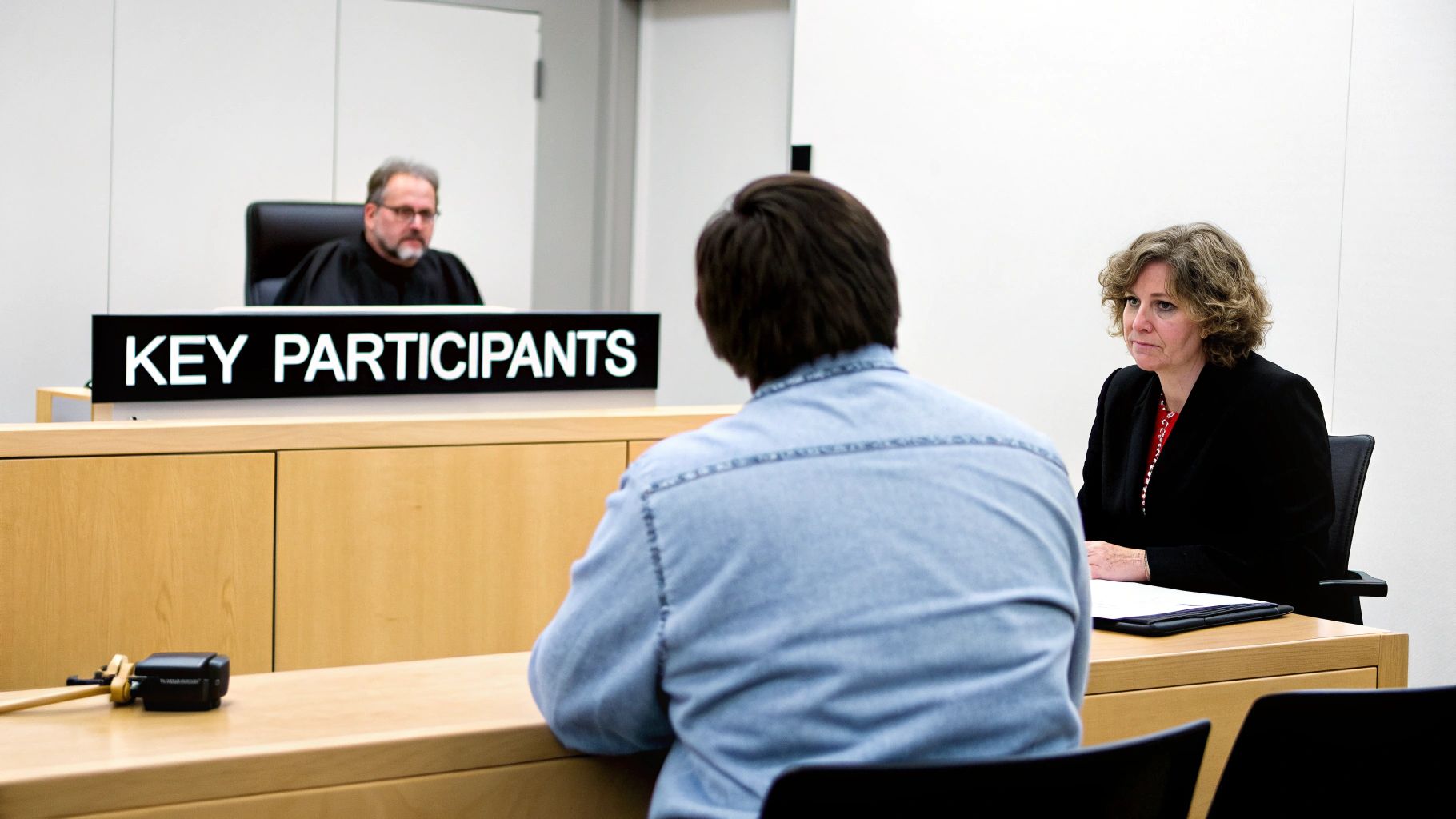
Walking into a deposition can feel less intimidating when you know who to expect in the room. Even though it is a formal legal proceeding, the group is usually small and focused, with each person having a specific job.
The main person is the deponent. This is the person being questioned under oath. It could be you, the person on the other side of the lawsuit, or an outside witness who has important information. As the deponent, your job is to give truthful and accurate answers.
Your Attorney and the Opposing Counsel
Your attorney is your advocate. They will prepare you for what to expect, sit beside you during questioning, and object if the other side asks an improper question. They guide you through the process, making sure it stays fair and your rights are protected.
On the other side of the table is the opposing counsel, the lawyer for the other party. They will ask most of the questions, and their goal is to gather information that helps their client's case. Their questioning is a standard part of the discovery process.
The Court Reporter and Other Parties
The court reporter is a neutral, state certified professional with a critical job: creating the official record. They will administer the oath and then create a verbatim transcript of every question, answer, and objection. That transcript becomes an official document in your case.
Depending on your case, a few other people might be present. A deposition is not a public event; only people directly involved usually attend.
To give you a clearer picture, here is a breakdown of who does what:
Roles and Responsibilities in a Deposition
| Participant | Role | Key Responsibility |
|---|---|---|
| Deponent | The Person Being Questioned | To provide truthful, accurate testimony under oath. |
| Your Attorney | Your Legal Counsel | To prepare you, protect your rights, and object to improper questions. |
| Opposing Attorney | The Questioner | To gather facts and testimony to support their client’s case. |
| Court Reporter | Official Record Keeper | To administer the oath and create a verbatim transcript of the entire proceeding. |
| Other Parties | Plaintiffs/Defendants | May attend to observe the testimony firsthand but typically do not speak. |
| Expert Witness | Subject Matter Expert | To provide specialized knowledge and opinions relevant to the case. |
For example, in a Forsyth County divorce case, your spouse might be in the room. If it is a Fulton County business dispute, a business partner could be there. Sometimes, an expert witness is deposed to explain their findings. No matter who else is in the room, your lawyer is there to manage the interactions and keep the focus on the facts.
A Step-by-Step Walkthrough of the Deposition Process
The idea of a deposition can feel daunting, but it helps to know what is coming. The process follows a standard sequence from start to finish. Knowing the sequence of events provides a roadmap, which can help calm any nerves.
It begins with a legal document called a Notice of Deposition. This is a formal order telling you when and where you need to appear to give testimony. You are legally required to attend.
Getting Started: The Opening Formalities
Whether you walk into a law office in Cumming or log into a video call, the deposition will begin with a few formalities. A court reporter will ask you to raise your right hand and swear an oath to tell the truth. It is the same oath you would take in a courtroom.
After the oath, the attorney who called the deposition will explain the ground rules. They will explain things like waiting for them to finish their question before you answer and making sure all your responses are verbal. Your own lawyer will be sitting right next to you, making sure everything is handled fairly.
The Heart of the Matter: The Questioning
This is the main event. The opposing attorney will begin asking you questions about the case. The questions can cover a lot of ground, from your personal background to the specific events that led to the lawsuit.
Your job here is simple: listen carefully and answer each question truthfully and directly. If a question is confusing, do not guess. It is perfectly fine to say, "I don't understand the question." Your attorney is there to protect you and may object to certain questions. If they do, they will tell you exactly what to do next.
People often think a deposition is a memory test. It is not. If you do not know the answer or cannot recall a detail, the best and most honest response is simply, "I don't know" or "I don't remember."
Wrapping It Up: Concluding the Deposition
When the opposing attorney is done, your own lawyer might ask you a few questions. This is usually done to clarify something you said earlier or to give you a chance to add important context. Once all questions are finished, the court reporter will announce that the deposition is concluded.
A few weeks later, you will receive a written transcript of everything that was said. Making sure this record is accurate is crucial, which highlights the importance of understanding legal transcription. You will get a chance to read through it and point out any mistakes on an "errata sheet" before it becomes an official part of the case file.
The way depositions happen has changed, especially recently. For divorcing parents in Alpharetta or businesses in Fulton County, remote depositions have become common. In recent years, a majority of firms began using remote options to save time and money for their clients, a trend that is expected to grow. For more on this shift, you can read research about hybrid litigation trends.
How to Prepare for a Successful Deposition
Preparation is the single most important factor for a successful deposition. While the thought of answering questions under oath can be intimidating, a focused preparation session with your attorney is designed to give you the confidence and clarity you need.
This meeting is where you will go through the key facts, documents, and the types of questions you can expect. Your lawyer will walk you through the themes the other side is likely to focus on, whether it is a contract dispute in Fulton County or a family law issue in Forsyth. The idea is not to memorize a script, but to get you comfortable with the facts so your testimony is consistent and truthful.
This simple graphic breaks down the basic flow of a deposition, from getting the notice to the actual questioning.

As you can see, it is a structured process with clear, predictable steps.
Core Strategies for Answering Questions
During the deposition, how you answer is just as critical as what you say. Your attorney will coach you on the best way to approach this, but the advice boils down to these core rules:
- Listen to the Entire Question: Do not jump ahead or assume you know what is being asked. Let the attorney finish their question completely before you start to think about your answer.
- Pause Before You Speak: Take a breath. This simple pause does two things: it gives you a moment to process the question, and it gives your lawyer a chance to object if the question is improper.
- Answer Only the Question Asked: You are not there to help the other side. Give direct, truthful answers without adding extra information or guessing. If the answer is "yes," "no," or "I don't know," that is a complete answer.
A common tactic is for the opposing lawyer to stay silent after you answer. They hope the silence will make you uncomfortable enough to start talking to fill the space. Do not fall for it. Once you have answered truthfully, wait for the next question.
Responding to Questioning Tactics
Opposing attorneys are trained to ask questions in specific ways to get the information they want. They might try to confuse you with complex questions, twist your words when they rephrase something, or act overly friendly to get you to lower your guard.
Your preparation session will help you spot these tactics and respond calmly and effectively. The best approach is to stick to the facts and keep your answers short and to the point.
These days, more depositions are happening over video, which adds a technical layer to your preparation. It is important to have a professional and secure video setup. For those interested in the technical side, there are resources on how to assemble an untouchable video conferencing deposition for attorneys that ensure the process goes smoothly.
With the right preparation, you can walk into your deposition feeling ready.
Common Questions About Depositions in Georgia
The legal world has its own language, and it is normal to have questions when you are facing a deposition. We have put together some of the questions our clients in North Georgia ask most often to give you clear, straightforward answers.
Can I refuse to answer a question in my deposition?
Generally, you cannot refuse to answer a question unless your attorney instructs you not to. This usually only happens if a question asks for legally privileged information, such as confidential advice you have discussed with your lawyer. If an opposing attorney asks an improper question, your lawyer will object for the record but will almost always tell you to answer anyway. It is critical to follow your attorney's guidance.
How long will my deposition take?
The length of a deposition depends on the complexity of your case. For a straightforward civil dispute in Forsyth County, a deposition might only last a few hours. However, for a high asset divorce or a detailed business contract disagreement in Fulton County, a deposition could take a full day or even longer. Your lawyer can provide a better estimate based on the specifics of your lawsuit.
Is my deposition testimony treated the same as testifying in court?
Yes, your deposition testimony carries the same legal weight as testifying in a courtroom. You are under oath, and a court reporter creates an official transcript that becomes a permanent part of your case file. If your case goes to trial, the opposing lawyer can use this transcript to highlight any inconsistencies between your deposition and your testimony on the witness stand, which is why truthfulness is essential.
What should I wear to my deposition?
You should dress as if you were going to court. Even if the deposition takes place in a conference room at an Alpharetta law office, it is an official legal proceeding. A professional appearance conveys that you understand the seriousness of the situation. Business or business casual attire is appropriate; avoid jeans, t-shirts, or overly casual clothing.
What happens after my deposition is over?
After the deposition, the court reporter will prepare a written transcript. You and your attorney will have a chance to review the document for any errors and note them on an errata sheet. Both sides then use the testimony to evaluate the case's strengths and weaknesses, which often leads to serious settlement discussions. The information from your deposition will heavily influence whether the next step is mediation, court motions, or trial preparation.
Understanding what a deposition is and how to handle it is a crucial part of protecting your interests in a lawsuit. If you are dealing with a civil dispute, family law matter, or business disagreement in North Georgia, having an experienced legal team on your side is essential. The team at Miles Hansford Law Firm is here to provide the clear, confident counsel you need. Contact us to discuss your case and learn how we can help guide you forward. https://mileshansford.com