


When a judge is facing a complex and emotionally charged child custody case, they often need an unbiased perspective. That’s where a Guardian ad Litem, or GAL, comes in. Think of the GAL as the "eyes and ears of the court"—usually a family law attorney appointed to investigate one thing and one thing only: what is in the child's best interests.
A GAL provides a clear, objective view that a judge simply cannot get from listening to conflicting testimony in a courtroom. Our firm guides clients in Fulton County, Forsyth County, and across North Georgia through this process, ensuring they are prepared and their rights are protected.
The Role of a Guardian ad Litem in Georgia Family Law
When parents in a high-conflict divorce or custody battle cannot agree on a path forward, a judge needs more information to make a decision that truly serves the child. This is particularly true when there are serious allegations or tangled family dynamics at play.
In these situations, a judge in Forsyth County, Fulton County, or another metro-Atlanta jurisdiction will appoint a GAL. This person's job is to conduct an independent investigation and then advocate for the child's well-being. The GAL is not working for either parent; their only client is the child.
The GAL steps into the family’s life to gather facts and present a recommendation to the court on custody and parenting time. This role has deep roots in English common law, where courts first began appointing guardians to protect minors' interests. The modern system was more formally shaped by the Child Abuse Prevention and Treatment Act of 1974, which required their appointment in certain child welfare cases.
Key Functions of a Guardian ad Litem
A GAL’s duties are all about investigation and reporting. To get a complete picture, their process usually includes several key steps:
- Interviews: The GAL will sit down and talk with everyone involved—the parents, the child, and other important people like teachers, doctors, or therapists in communities like Alpharetta, Roswell, or Cumming.
- Home Visits: They will schedule visits to each parent's home. This is not a white-glove inspection; it is an opportunity to see the living environment and observe how the parent and child interact in their own space.
- Document Review: The GAL digs into important records, from school report cards and medical histories to any relevant court filings.
- Reporting to the Court: Once the investigation is complete, the GAL prepares a detailed written report for the judge. This report always concludes with a specific recommendation for the parenting plan.
A Guardian ad Litem’s final report is a critical piece of evidence. While the judge makes the final call, a GAL's recommendation carries immense weight because it offers a neutral, in-depth perspective focused entirely on the child.
Understanding what a GAL does is the first step in getting ready for this part of your custody case. Protecting your kids through this process is what matters most. You can learn more by reading our article on protecting children in custody battles.
To break it down even further, here's a quick look at the GAL's core functions.
Guardian ad Litem (GAL) Key Functions at a Glance
This table summarizes the primary roles and characteristics of a Guardian ad Litem in a Georgia family law case.
| Role | Primary Responsibility | Appointed By | Focus |
|---|---|---|---|
| Investigator | Gathers facts through interviews, home visits, and record reviews. | A Superior Court Judge | The child's overall well-being and safety. |
| Advocate | Represents the child's best interests to the court. | A Superior Court Judge | Presenting an unbiased recommendation on custody. |
| Neutral Party | Remains impartial and is not an attorney for either parent. | A Superior Court Judge | Objective assessment of the family dynamic. |
Ultimately, the GAL's involvement is designed to give the court a complete and unbiased picture, ensuring the final custody decision is genuinely centered on the child's needs.
What to Expect During a GAL Investigation
Once the judge appoints a Guardian ad Litem in your case, the investigation gets underway. It’s natural to feel like your life is suddenly under a microscope, but knowing what’s coming can ease a lot of that stress and help you put your best foot forward. The GAL is not there to take sides; their only job is to gather objective information to help the court.
Think of it as a comprehensive fact-finding mission that covers nearly every part of your child’s life. This gives the GAL a complete, 360-degree view that goes far beyond what lawyers can present in the limited time of a court hearing. The whole point is to be thorough so their final report to the judge is built on a solid foundation.
The Interview Process
A big piece of the investigation is a series of interviews. The GAL will want to sit down and talk with each parent, one-on-one and in private. This is your chance to share your side of the story—your parenting style, your bond with your child, and any concerns you have for their well-being.
Of course, the GAL will also interview your child. These conversations are always handled carefully and are tailored to the child's age, making sure they do not feel like they’re being put in the middle. Beyond the immediate family, the GAL will also speak with collateral contacts, which is a formal term for the other important people in your child's world.
These contacts often include:
- Teachers and school counselors at your child’s school, whether in Roswell or Johns Creek.
- Therapists, pediatricians, or other doctors.
- Close family members who play a big role, like grandparents.
- Coaches, daycare staff, or even trusted family friends.
Home Visits and Document Reviews
At some point, the GAL will schedule a visit to each parent's home. Do not panic—this is not a white-glove inspection of your housekeeping skills. The goal is simply to see the living environment firsthand and observe how you and your child interact naturally. They are looking for a safe, stable, and loving atmosphere.
Along with the in-person meetings, the GAL will also need to review a lot of paperwork. It’s a good idea to start gathering things like your child's school records, recent medical reports, and any relevant communication with the other parent. Basically, anything that helps paint a picture of your child’s life is fair game.
The infographic below breaks down the three core stages of the GAL's job.
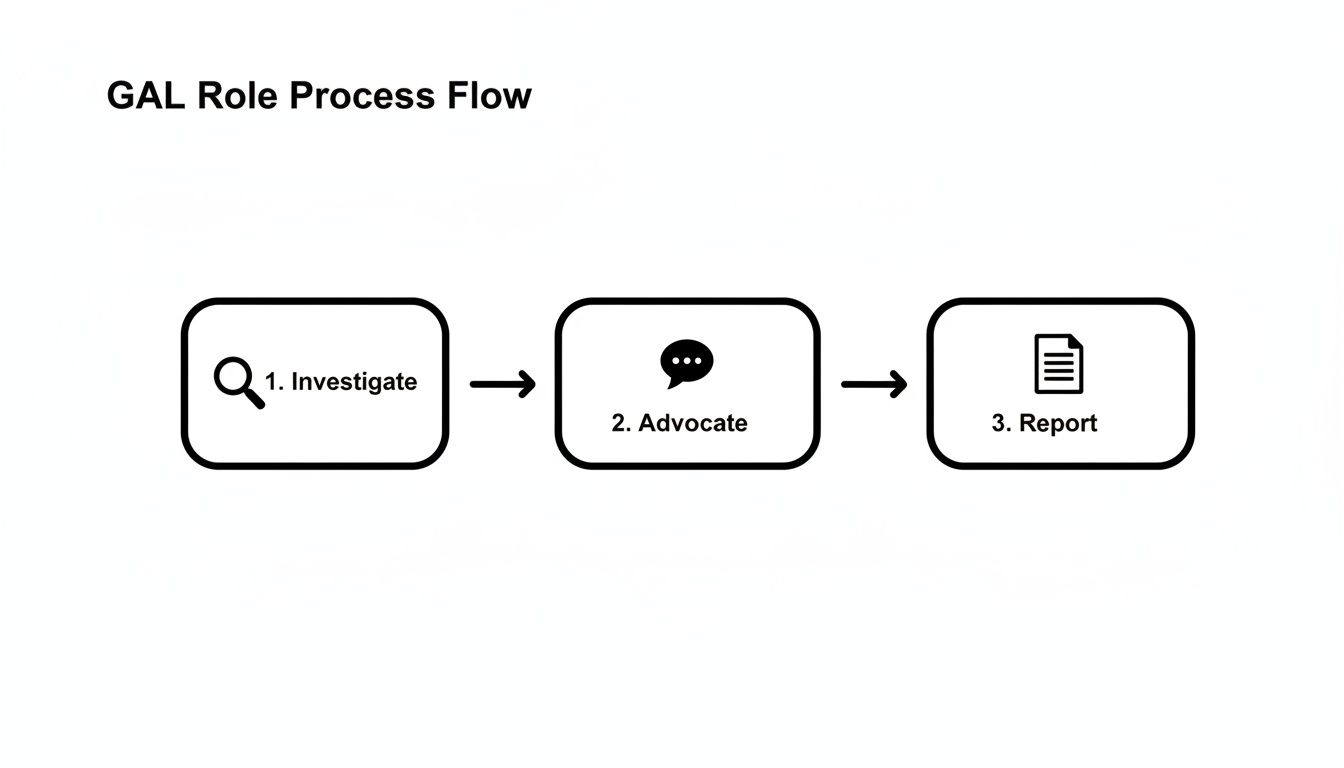
As you can see, the process flows from gathering information to forming a recommendation that advocates for what is best for the child.
The Scope and Limits of the GAL's Role
It’s absolutely critical to remember that a GAL's role is investigative and advisory only. They do not have the power to make the final custody decision; that authority belongs to the judge and the judge alone. The GAL acts as the court's neutral expert, providing a recommendation based on everything they have learned.
The need for this role is clear when you look at the numbers. Over half of all divorces in the U.S. involve minor children, which impacts more than 1 million kids each year. GALs are a common feature in these cases, but many areas struggle with high caseloads. This can make it tough for them to build the deep rapport they need with the children they are appointed to help. It really highlights how essential—and challenging—their job is. You can explore more research on this topic and its impact on children's welfare in family law cases.
The Guardian ad Litem is not your advocate or your adversary. They are an advocate for your child. Cooperating fully and honestly is the best way to ensure the final report accurately reflects your ability to provide a safe and loving home.
By understanding these steps, parents in Forsyth and Fulton counties can navigate the GAL investigation with more confidence, ready to show their commitment to their child's best interests.
How a GAL's Recommendation Influences the Final Custody Order
It’s one of the first questions parents ask when a Guardian ad Litem gets involved in their North Georgia custody dispute: how much does the GAL’s opinion really matter? The short answer is, a lot. While the judge in a Fulton or Forsyth County courtroom has the final say, a GAL’s recommendation carries an incredible amount of weight.
Once the GAL has wrapped up their investigation, they submit a detailed written report to the court. This is not just a simple summary; it is a deep dive into the family's life. The report will cover everything from the stability of each parent's home in Alpharetta or Cumming to what the child wants, assuming they are old enough to express a preference.
Ultimately, the report will give a specific recommendation for custody, parenting time, and sometimes other related issues.
Why Judges Value the GAL's Report
Judges lean heavily on these reports for one simple reason: the GAL provides an impartial, third-party perspective that’s just impossible to get inside a courtroom. The GAL has spent weeks, sometimes months, interviewing everyone involved, digging through records, and seeing the family dynamics up close. That gives them a level of insight a judge simply cannot get from hearing testimony alone.
Think of the GAL as a neutral fact-finder. Their entire job is to cut through the parental conflict and focus only on the child’s well-being. This objective viewpoint is exactly what a judge needs to make a thoughtful, informed decision.
From Investigation to Court Order
There is often a very straight line between what a GAL finds and what the final custody order says. Judges use the report as a guide, and the recommendations frequently become the framework for the final parenting plan.
Here are a few real-world examples of how a GAL’s findings can shape a judge's decision:
- Parenting Styles: Let's say a GAL observes that one parent's rigid, demanding style makes a child anxious, but the other parent's structured-but-nurturing approach helps the child thrive. That detail will go in the report, which might recommend making the nurturing parent the primary physical custodian.
- Home Environment: A GAL might see one home as chaotic and unpredictable, while the other offers a stable, consistent routine. This could easily lead to a recommendation that the child live primarily in the more stable environment.
- Co-Parenting Abilities: If the investigation shows one parent is constantly bad-mouthing the other, sharing court details with the child, or refusing to communicate, the report may suggest supervised visitation or limited decision-making authority for that parent.
In situations where a child's emotional health is a serious concern, a GAL might also recommend specific support, like play therapy for kids, to help them work through the stress of the divorce.
The GAL's report is not just another piece of paper in the court file; it is often the single most influential piece of evidence a judge considers when creating a parenting plan. How you cooperate and the honesty you show during the process can directly shape how fair and accurate that report is.
At the end of the day, the GAL’s recommendation gives the court a clear, child-focused path forward. It is not legally binding, but it is a powerful advisory tool that Georgia judges rely on to protect the best interests of the children caught in the middle of these tough cases.
Navigating the Costs and Timeline of a GAL Appointment
When a Guardian ad Litem gets appointed to your family law case, two questions immediately pop into most parents' minds: "How long will this take?" and "How much will this cost?"
If you're a parent in Cumming, Alpharetta, or anywhere in North Georgia, getting a handle on these practical details is key. Knowing what to expect can lower your stress and help you and your attorney prepare for what is ahead.
First, let's be clear: this is not a quick process. A good GAL investigation takes time. They need to conduct interviews with everyone involved, make home visits, and carefully review documents. You should realistically prepare for the entire process—from the initial appointment to the final report—to last several months.
Understanding the Financial Commitment
The cost of a GAL is a major concern for most families, and rightly so. In Georgia, the court usually orders the parents to split the cost of the GAL's services. These fees cover all the time the GAL spends investigating your case, writing their report, and appearing in court.
The final bill can vary dramatically. A relatively simple case might only require a few thousand dollars. However, a high-conflict case with lots of witnesses to interview and piles of documents to sift through will naturally cost more, sometimes several thousand dollars.
A court order will spell out exactly how the GAL’s fees are to be divided. While a 50/50 split is common, a judge can change that allocation based on each parent's financial circumstances.
It’s crucial to talk about these potential costs with your family law attorney right from the start. They can help you anticipate the financial impact and ensure the court's payment arrangement is fair and reasonable for your situation.
Clarifying Roles and Your Rights
As the investigation moves forward, it’s easy to get confused about who does what. A GAL is not your attorney, nor are they a custody evaluator. Understanding these distinctions is critical.
To help clear things up, here’s a quick breakdown of the different professionals you might encounter in a Georgia custody case.
Role Distinctions in Custody Cases
| Professional | Role | Represents | Final Say |
|---|---|---|---|
| Guardian ad Litem (GAL) | Investigates and recommends what is in the child's best interest. | The Child's Best Interests | No; provides a recommendation to the judge. |
| Parent's Attorney | Advocates for the legal rights and goals of their client (the parent). | The Parent | No; argues the case on behalf of the parent. |
| Custody Evaluator | Performs a psychological evaluation of the family and provides an expert opinion. | Neutral Expert | No; provides an expert report to the judge. |
| Judge | Hears all evidence, reports, and testimony to make the final legal decision. | The Court | Yes; issues the final custody order. |
Understanding these roles helps put the GAL’s work into perspective.
Finally, never forget that you have rights. Your attorney is entitled to review the GAL’s final report and see all the evidence they used to form their opinions. If that report contains factual errors or biased conclusions, your lawyer can—and should—challenge those findings in court. This step ensures your side of the story is heard loud and clear before a judge makes a final, life-changing decision.
How to Prepare for and Interact With the Guardian ad Litem
The time you spend with the Guardian ad Litem can be some of the most pivotal moments in your entire child custody case. The GAL’s role is to observe your life and gather the facts, and how you present yourself will directly shape their final recommendation to the judge. The keys to success are preparation, honesty, and a relentless focus on your child.
This is not about putting on a show for the GAL. It is about genuinely showing them that you are a fit parent who is deeply committed to your child's well-being. A calm and cooperative attitude goes a long way, demonstrating that you are a stable, reasonable parent who can put your child first, even when things get stressful.

Preparing for Interviews and Home Visits
Before the GAL ever calls to schedule a meeting or a home visit, you should be getting organized. Taking the time to prepare will boost your confidence and help you give the GAL a clear, accurate picture of your life. Think of it like putting together a portfolio that tells the story of your child's world and your important role in it.
A great first step is gathering all your important documents. This simple, proactive move not only saves everyone time but also shows the GAL that you are organized and taking this process very seriously.
Key documents to have on hand include:
- Your child’s most recent report cards and any emails or notes from their school.
- Medical records, including contact information for doctors, dentists, or therapists.
- Your work schedule alongside your child's schedule for extracurriculars.
- A list of important people in your child’s life (like teachers, coaches, and close family friends) with their contact information.
When it's time for the home visit, do not stress about interior design. Instead, focus on making your home a safe, clean, and child-friendly space. The GAL is not there to judge your decorating taste; they just want to see that your child has a stable environment that meets their basic needs.
Best Practices for Your Interactions
During every single conversation with the GAL, your focus must remain on your child. It can be tempting to use this time to vent or list your complaints about the other parent, but that approach often backfires. While it is important to be honest about any serious concerns you have, framing everything in the context of your child's best interests is always more powerful.
Following a few simple "do's and don'ts" can make all the difference.
Do:
- Be Honest and Transparent: Always, always tell the truth. GALs are trained investigators who are very good at spotting inconsistencies. Getting caught in a lie can destroy your credibility.
- Focus on Your Child: Center your answers around your child’s daily routines, their needs, and their feelings. Talk about your relationship with your child and what you bring to their life.
- Cooperate Fully: Respond to the GAL's requests promptly and be as flexible as you can with scheduling. Your cooperation shows that you respect the court-ordered process.
Don't:
- Coach Your Child: Never tell your child what to say to the GAL. They are trained to recognize when a child is just repeating a parent’s script, and this behavior is incredibly damaging to a parent's case.
- Criticize the Other Parent: Avoid the urge to bad-mouth your ex. If you have legitimate concerns, present them as facts that relate directly to your child’s safety or well-being.
- Be Argumentative or Defensive: Remember, the GAL is a neutral party. Answering questions calmly and respectfully will serve you much better than adopting a confrontational attitude.
The most powerful case you can make is through your actions. Consistently showing that you are a stable, loving, and child-focused parent will speak volumes more than any single statement you can make.
An experienced family law attorney is your best guide through this entire process. We can help you anticipate the GAL's questions, prepare your documents, and understand how to effectively present your strengths as a parent. If you want to learn more, you can explore our guide on what to do to get ready for a child custody case. Successfully navigating a GAL investigation is a huge part of that preparation.
How Your Family Law Attorney Supports You During a GAL Investigation
It's completely understandable to feel overwhelmed and even a little intimidated when a Guardian ad Litem is appointed to your case. This is a deeply personal process, and you should never have to go through it alone. Think of an experienced family law attorney as your strategic partner—a calm, steady guide who can help you protect your parental rights and present your case clearly and effectively.
Our support goes far beyond what happens inside the courtroom. We are here to help you prepare for every single step, making sure you feel confident and ready.
Strategic Preparation and Evidence Management
One of the most valuable things a family law attorney does is prepare you for interviews with the GAL. Having been through this process countless times, an attorney can anticipate the kinds of questions you’ll be asked. This allows them to help you practice framing your answers in a way that is clear, honest, and always focused on your child’s best interests. Good preparation helps you communicate your strengths as a parent without letting frustration or emotion take over.
An attorney also helps you gather and organize the most compelling evidence for the GAL to review. This is not just a random assortment of documents; it’s a curated story of your life as a parent. This might include:
- Character reference letters from teachers, coaches, or other community members who know you and your child.
- Timelines and calendars that clearly show your involvement in your child's daily life, from school events to doctor's appointments.
- Photographs and videos that genuinely highlight the positive, loving relationship you share with your child.
By pulling all this together, your attorney ensures the GAL sees a complete and favorable picture of your role in your child's world. For parents in Forsyth County, Fulton County, and across North Georgia, taking this proactive approach is absolutely essential.
Communication and Advocacy
All communication with the Guardian ad Litem should really go through your attorney. This creates a professional buffer and prevents the kind of emotional, off-the-cuff responses that can easily be misinterpreted. Your lawyer makes sure every interaction is properly documented and handled, which allows you to focus on what matters most: your child.
The need for GALs is more significant than many people realize. In the U.S., with roughly 1.2 million divorces each year, more than 1 million children experience the dislocation that comes with their parents separating. This reality is what drives the need for GAL appointments in highly contested cases, as judges rely on them as impartial investigators. You can learn more about the research on GAL demand and what it means for the court system. For families in Alpharetta or Cumming, this statistic just highlights how important it is to have skilled legal counsel advocating for you.
What happens if the final GAL report contains mistakes, shows bias, or draws conclusions that just are not supported by the facts? Your attorney will be ready to challenge it. An attorney can cross-examine the GAL in court, present evidence that tells the other side of the story, and make sure the judge has a full and fair view before making a final custody decision. Having the right lawyer in your corner is a game-changer, and you can learn more about how to choose a divorce lawyer to help you navigate this complex process.
Our firm’s calm, confident approach is designed to guide you through this incredibly stressful time. We are here to protect your rights every step of the way and work toward a positive outcome for both you and your child.
We Hear These Questions All the Time
When parents in North Georgia learn a Guardian ad Litem will be involved in their custody case, they understandably have a lot of questions. Here are some straightforward answers to the concerns we hear most often from our clients in Fulton County, Forsyth County, and the surrounding communities.
Can I just say "no" to a home visit from the GAL?
No, you should not refuse a request for a home visit. A GAL investigation is ordered by the court, and refusing to cooperate is a major red flag that can seriously harm your case. The best approach is to work with your family law attorney to prepare for the visit and understand what the GAL is looking for.
Does the Guardian ad Litem decide who gets custody?
No, the GAL does not have the final say. That power belongs solely to the judge, who makes the final legal decision. The Guardian ad Litem’s job is to investigate the family situation and provide a detailed recommendation to the court based on the child's best interests.
While a GAL's report is not legally binding, it carries immense weight in the courtroom. Think of the GAL as a neutral, third-party investigator who provides a deep-dive perspective that a judge simply cannot get during a hearing. This makes their input incredibly influential.
What if I completely disagree with the GAL's report?
You absolutely have the right to challenge it. If you and your lawyer feel the report is biased, leaves out critical facts, or is just plain wrong, you can fight it in court. Your attorney can file formal objections to the report, cross-examine the Guardian ad Litem on the stand, and present your own evidence to counter their findings.
Who ends up paying for the Guardian ad Litem?
Typically, the parents split the cost of the GAL. A judge in a Georgia court, whether in Marietta or Dahlonega, will issue an order that outlines how the fees are to be paid. It is not always a perfect 50/50 split, as the court can allocate costs based on each parent's financial situation.
Should I tell my child what to say to the GAL?
Absolutely not. You should never coach your child on what to say. Guardians ad Litem are professionals trained to spot when a child’s answers sound rehearsed or are not their own. Getting caught doing this can destroy your credibility and severely damage your case.
Going through a GAL investigation adds a new level of stress to what is already an emotional time. Having an experienced family law attorney in your corner can make a world of difference. We provide the steady, knowledgeable guidance you need to protect your rights and work toward the best possible outcome for your family.
If you are facing a child custody dispute in North Georgia, the team at Miles Hansford has the experience to help you move forward with confidence. Contact us to learn how we can support you.